Delivering Full-Size Torque From a Midsize Truck With the 2026 Colorado’s Turbo I-4
August 11 2026,
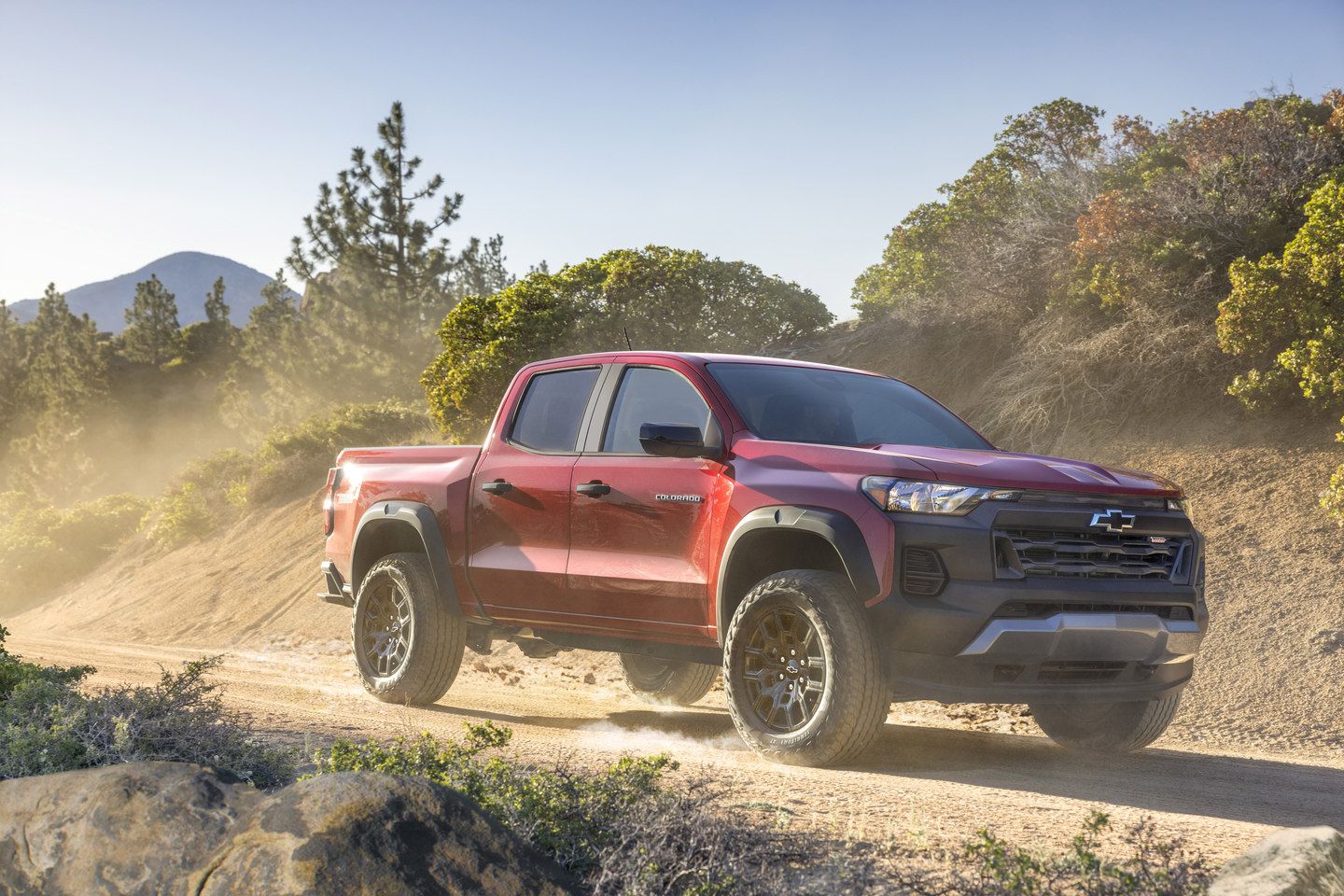
Alberta shoppers who need to move a livestock trailer or a flatbed load often assume the job requires a full-size pickup. The 2026 Chevrolet Colorado, built around a single turbocharged engine, changes that assumption. This article looks at how that engine actually works, not which trim to pick.
The 2.7L TurboMax Engine at the Centre of Every Trim
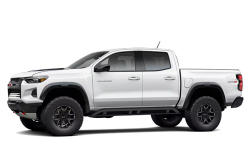
Every 2026 Colorado, from WT to LT, Trail Boss, Z71, and ZR2, runs the same 2.7-litre TurboMax four-cylinder engine. It produces 310 horsepower and 430 lb-ft of torque on gasoline, paired with an eight-speed automatic transmission and four-wheel drive standard across the lineup.
That torque figure is the kind of number usually tied to larger, full-size trucks. Packaged into a midsize Colorado, it means the truck can pull and carry loads that once required stepping up a size class, without the engine changing as you move through the lineup from a work truck to an off-road rig.
How the Turbo Four and 4WD Work Together
A turbocharger builds boost early, so torque arrives at low engine speed instead of after a long wait for revs to climb. Paired with the eight-speed automatic’s gearing, the Colorado can hold a gear and pull through a grade rather than hunting for a downshift on the way up.
Four-wheel drive and a 3.42 rear axle ratio come standard across every trim, giving each Colorado the same starting point for traction and gearing. The Trailering Package, standard on Trail Boss and Z71, adds tow/haul mode, powertrain grade braking, and cruise grade braking to manage shifting and speed under load.
What Full-Size Torque Means for Towing
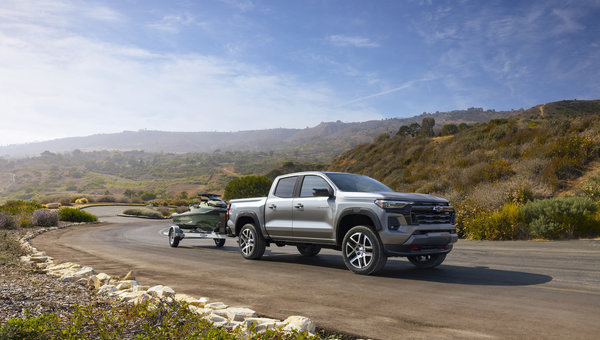
A Colorado with the 2.7L TurboMax and no added hardware tows up to 3,500 lbs (1,588 kg), backed by a 9,100 lbs (4,128 kg) gross combined weight rating. Add the Trailering Package, standard on Trail Boss and Z71 and available on WT and LT, and towing climbs to 7,700 lbs (3,493 kg) with a 13,250 lbs (6,010 kg) GCWR. The ZR2’s own configuration tows up to 6,000 lbs (2,722 kg) within an 11,600 lbs (5,262 kg) GCWR.
|
Configuration |
Max Towing |
GCWR |
|
2.7L TurboMax (standard) |
3,500 lbs (1,588 kg) |
9,100 lbs (4,128 kg) |
|
2.7L TurboMax with Trailering Package |
7,700 lbs (3,493 kg) |
13,250 lbs (6,010 kg) |
|
2.7L TurboMax (ZR2) |
6,000 lbs (2,722 kg) |
11,600 lbs (5,262 kg) |
Trailer tongue weight should run 10 to 15 percent of the loaded trailer, up to 770 lbs (349 kg), to stay within the rear axle and gross vehicle weight ratings. Hitch Guidance and Hitch View are standard on every trim, showing the hitch point and trailer path on the centre display. The Trailering Package and equipment standard on Trail Boss, Z71, and ZR2 add an integrated trailer brake controller and an in-vehicle trailering app with setup checklists.
Payload, Bed Space, and Everyday Hauling

Towing is only half the job. Payload ranges from 2,046 lbs (928 kg) on WT and LT down to 1,445 lbs (655 kg) on ZR2; its off-road suspension and hardware use up some of that capacity.
The cargo box measures 1,567 mm long and 1,494 mm wide at the floor, for 1,186 L of volume, the same across every trim. Standard tie-downs and available LED lighting keep tools, quads, or weekend gear secured and visible after dark.
- StowFlex power tailgate: standard on LT, Trail Boss, Z71, and ZR2; available on WT
- EZ-Lift and Lower tailgate: standard on LT, Trail Boss, Z71, and ZR2; available on WT
- 120-volt bed-mounted power outlet: standard on Z71 and ZR2, available on LT
- Cargo box LED lighting: available on every trim
Trail Boss, Z71, and ZR2: Same Engine, Different Jobs
WT and LT carry the TurboMax engine in a work-focused, on-road package with 201 mm of ground clearance. Trail Boss raises that to 242 mm with a factory suspension lift, built for drivers who want a taller stance without leaving pavement behind.
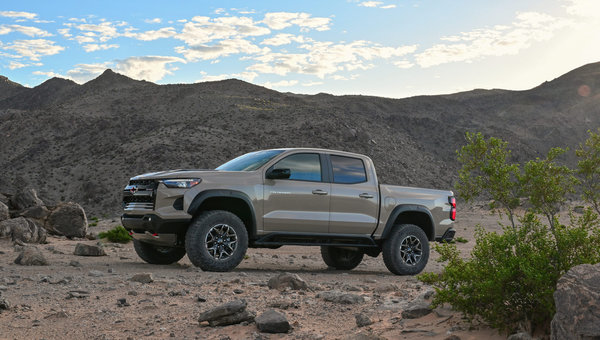
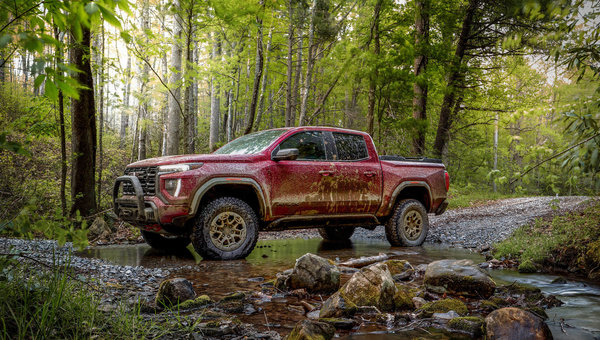
Z71 sits at 226 mm of clearance on the same powertrain, aimed at on-road comfort with off-road capability layered in. ZR2 goes further still: 273 mm of ground clearance, an Autotrac two-speed transfer case, and driver-selectable front and rear locking differentials. It is the most hardware-heavy expression of the TurboMax platform, trading some payload and highway efficiency for terrain capability.
None of these trims get a different engine. The 310 hp and 430 lb-ft stay constant; what changes is the suspension, axles, and traction hardware built around them.
Fuel Economy for Job Sites and Commutes
WT, LT, Trail Boss, and Z71 are rated at 13.6 L/100 km in the city and 10.7 L/100 km on the highway. The ZR2’s larger tires and taller stance bring that to 14.1 L/100 km city and 13.8 L/100 km highway.
Every trim carries an 81 L fuel tank, enough for longer workdays or highway stretches across Alberta’s distances between fill-ups. The 11.3-inch touchscreen and 11-inch driver display keep trip and trailering information visible without pulling attention off the road.
Finding the Right Colorado at McDonald Chevrolet in Taber
The 2026 Colorado pairs one turbocharged engine with towing ratings from 3,500 lbs (1,588 kg) to 7,700 lbs (3,493 kg), a 1,186 L cargo box, and trailering technology standard from WT through ZR2.
Visit McDonald Chevrolet in Taber to see how the TurboMax engine and trailering setup match your towing and work needs, and get behind the wheel of the 2026 Colorado.